 Member of Morris Group International
Preventing Glass Tipping and Breakage: The Importance of Sink Design

January 27, 2025
Glassware is an essential service component in busy commercial environments like bars, restaurants, and event venues. However, the high volume of glassware usage in these settings presents unique challenges.
While restaurants, bars, and caterers expect some accidents, glass tipping and breakage in a busy kitchen can lead to injuries, service disruptions, and financial losses. Choosing sinks with the right design features can help minimize these risks and ensure a safer, more efficient operation.
The Role of Sink Design in Preventing Glassware Accidents
Engineers at Acorn Engineering Company put a lot of thought into preventing glassware accidents when designing Acorn-Sinks. That’s because the design of a sink plays a crucial role in the stability of glassware during washing and handling.
Sinks with inadequate support or improper drainage can increase the likelihood of glasses tipping over and breaking. On the other hand, sinks designed with glassware safety in mind can significantly reduce the occurrence of such accidents. When selecting sinks for your establishment, look for the following key features.
Vertical Side Walls with Small Internal Radii
Vertical walls with small curves inside them are better for holding glassware than sinks with sloping or rounded walls. The straight edges help keep glasses steady, making them less likely to tip over.
Adequate Sink Depth
Make sure your sink is deep enough to hold your glasses safely. If it’s too shallow, tall glasses might tip over easily. A good depth to aim for is at least 8″ for regular glasses.
Proper Drainage & Slope
Fast drainage is essential to prevent water from pooling in the sink, which can create an unstable base for glassware. Look for sinks with a gentle slope towards the drain to ensure that water flows away quickly. A well-designed drainage system also helps maintain a clean and safe washing environment by reducing the build-up of debris and bacteria.
Additional Considerations
While sink design is a critical factor in preventing glassware accidents, it’s not the only one. Proper handling techniques, regular staff training, and consistent maintenance of sinks and washing areas all contribute to a safer environment. Implement best practices such as using both hands when possible and providing ample space for drying and storage.
By selecting sinks with safety-focused design features and promoting safe handling practices, you can significantly minimize the risk of glass tipping and breakage in your establishment. This creates a safer environment for your staff and patrons and helps prevent costly disruptions to your operations.
When planning your next renovation or new build, keep these sink design considerations in mind to optimize your glassware safety and efficiency.
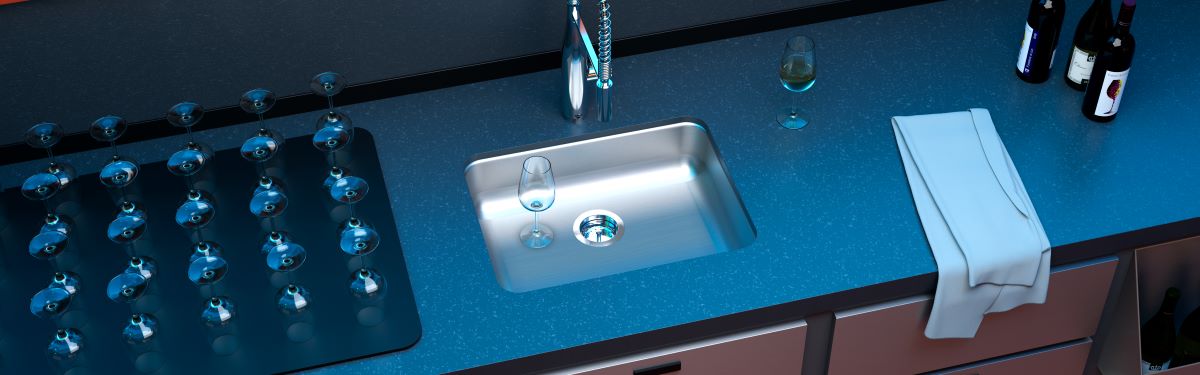
The Advantages of Stainless Steel Sinks
Consider the material when choosing sinks that incorporate the safety features discussed above. Acorn-Sinks ® stainless steel sinks are an excellent choice for busy commercial environments. They are durable, easy to clean, and resistant to corrosion and staining. Stainless steel’s non-porous surface also minimizes the growth of bacteria, ensuring a hygienic washing environment.
Stainless steel is infinitely recyclable, never losing the inherent properties that make it valuable and useful. Furthermore, stainless steel sinks are available in various sizes and configurations, making it easy to find options that fit your needs and space requirements.